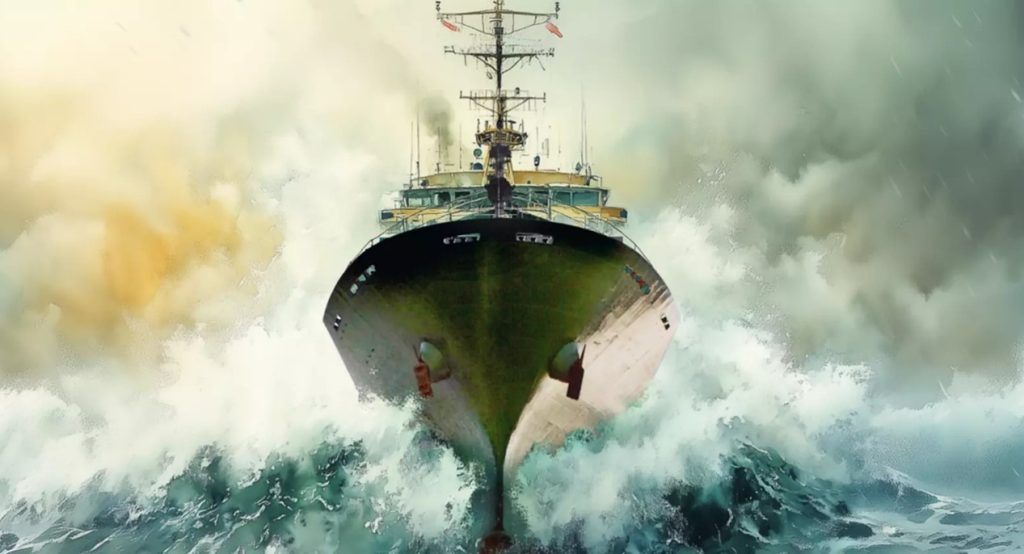
Hydrogen offers promising potential application scenarios for ship propulsion. An electric motor installed in the drivetrain, which is supplied with energy from a fuel cell system, requires only a continuous supply of oxygen and hydrogen. Stored in pressurized or refrigerated tanks, this can be implemented on board a ship, bringing significant environmental benefits.
According to the Federal Waterways and Shipping Administration, for example, around 172 million tons of freight are transported by ships every year, thereby relieving traffic congestion on road and rail. Due to their high tonnages, ships can provide a comparatively environmentally friendly means of transport, as one single vessel can replace 150 lorries.
eCap Marine of Hamburg, Germany, is one company making this a reality, along with assistance from HARTING for electrical connectivity solutions, as reported by HARTING in a recent issue of its technology magazine tec news.
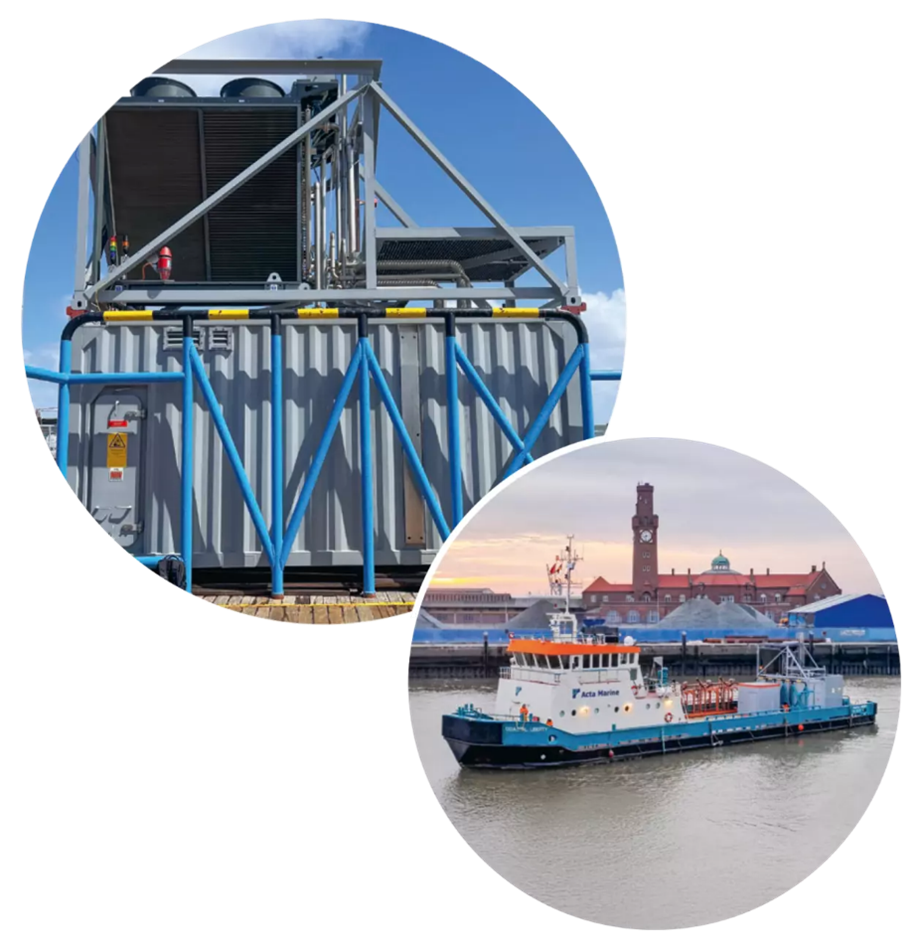
Committed to the clearly defined aim of minimizing the environmental impact of shipping, the Dutch shipping company Acta Marine has opted for green hydrogen as its main energy source. With the Mittelplate supply vessel Coastal Liberty, which is deployed in the Wadden Sea, the company is now endeavoring to set a pioneering example in the direction of sustainability and emission-free, on-board energy supply.
ECap Marine was assigned to the task of converting the emission-free electric propulsion system to a hydrogen-based system. Over a period of two years, the company developed a containerized hydrogen-electric energy system that enables emission-free ship operation. The so-called tanktainer system featuring two Ballard FCwave fuel cells (2 x 200 kW), a maritime battery system, a fire extinguishing system, tank units, a customized energy management system and all the necessary cooling and safety equipment can be exchanged “plug-and-play” by way of a harbor crane and refilled in ports using an electrolysis system.
As Lars Ravens, Managing Director at eCap Marine, explains: ”To date, this is a unique installation on board a seagoing vessel. Thanks to modular and individually configurable components, these are also scalable for larger merchant ships and smaller inland vessels.” At the beginning of 2024, the retrofitted supply vessel for the tanker system was also awarded class certification from DNV (German Maritime Industry Classification Organisation).

Arne Küddelsmann, Project Engineer at eCap Marine, explains that changing, disconnecting and reconnecting the hydrogen tanks is very convenient and safe thanks to a tool-free connectivity concept and the standard connections for cranes and lorries. This is ensured, among other things, by connectivity solutions that meet the highest DNV requirements in terms of safety, durability and reliability. Together with eCap Marine, HARTING developed the innovative solution that ensures efficient networking of components and systems.
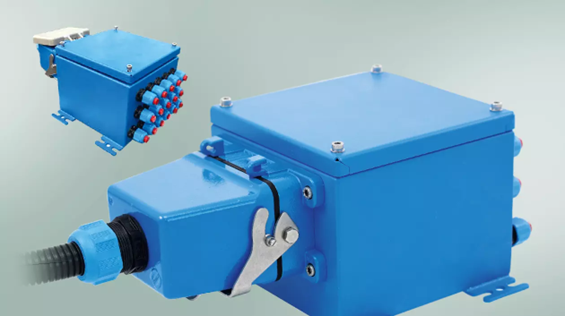
A special interface was required for communication between the PowerPac and the H2 tank. “We thought of a box that for one would pick up the signals from the transmitters and the valve position indicators from the tank. It should then be possible to connect this on the other side of the housing using a plug-in coupling connection,” says Küddelsmann, explaining the solution.
The selection valves of the tank should be monitored by way of the interfaces of the box. System temperature and pressure should also be transmitted. On the one hand, this is safety relevant, while on the other hand it can also be used to determine the fill level in the tank. The high IP class required for the housing for the electrical and electronic components presented another challenge. This is essential for the long service life of a ship navigating the North Sea. In addition, all electrical components of the tank container system had to be ATEX-compliant. This protection class is required for a potentially explosive atmosphere, as is given due to the low ignition energy of hydrogen.
“For me, notes Küddelsmann, was a special joint achievement to obtain ATEX certification for a product with such complex requirements in the shortest possible time due to the use of water.”
In order to enable the developers of e Cap Marine to concentrate on the electrolysis and storage technology and series production, HARTING assumes the responsibility for the specification, selection and development of the appropriate electrical connection technology. The accredited HARTING Quality and Technology Centre accompanies the qualification, validation and, if required, the approval of the developed solution.
Guido Steenbock sums things up as follows: “Our commitment to customisation and space optimisation is illustrated by the terminal boxes in this project. These boxes are designed to offer robust and space-saving connection options that can be seamlessly integrated into existing infrastructures. Our customers benefit from plug & play-capable solutions that are pioneering for the hydrogen industry.”