Celadyne Technologies has been awarded $1 million for further development of high-performing membranes for fuel cells and electrolyzers. From the DOE’s Advanced Materials & Manufacturing Technologies Office and coordinated by its new Critical Materials Collaborative, the grant was announced December 10. It is part of a package of 14 awards spanning an assortment of areas including rare earths recycling, hydrogen fuel cells, magnetic technologies and materials processing to improve America’s domestic supply chain of critical materials.
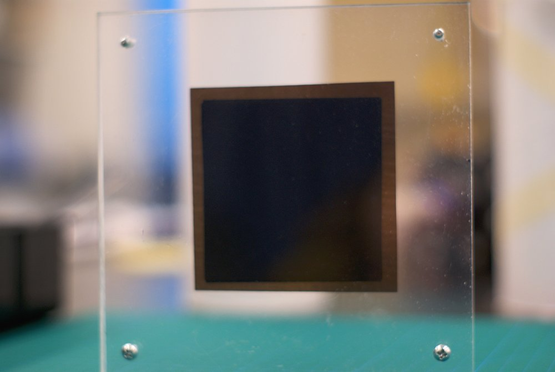
Named “Low Iridium and Platinum Loading Membrane Electrode Assemblies for Electrolysis”, the project has Argonne National Laboratory as a partner. Celadyne aims to develop catalyst formulations that pair with a thin low-resistance proton exchange membrane for hydrogen devices—membranes that use 72% less platinum and iridium and 92% less fluorine than state-of-the-art membranes. The membrane, called Dura, was developed as a gas-impermeable hydrocarbon layer in a bilayer architecture using DOE SBIR funding. Developing a catalyst to use in conjunction with the Dura membrane will enable high-current density electrolyzer operation with low critical material demand and reduced hydrogen crossover for fuel cells.
Dura is described by Celadyne as the first ever low permeability bilayer proton exchange membrane that is durable, chemically impermeable, and conductive that handles and integrates like traditional perfluorosulfonic acid membranes. It uses a composite approach to reduce gas permeation across the membrane while maintaining high conductivity and stability to enable thinner membranes with overall lower membrane resistance. Cutting down hydrogen crossover, it addresses the root cause of free radical formation in fuel cells while enhancing electrolyzer safety, especially at high pressures and low current densities.
In May, Celadyne was selected to join the AF Ventures innovation program of the Air Force Research Laboratory focused on innovation by private enterprise in decarbonization and hydrogen fuel cell production technology.

“AFVentures was created to collaborate with small businesses to develop and deliver disruptive Air and Space capabilities, and we’re honored to be included on that list,” says Gary Ong, Founder & CEO of Celadyne Technologies.” “Our goal has always been simple: unlock the potential of hydrogen via durable, sustainable, and cost-effective use of hydrogen. The defense landscape comes with its own set of challenges like aggressive operational environments, a high carbon footprint, and a legacy infrastructure in need of modernization.”
Based in Chicago, Celadyne raised an oversubscribed $ 4.5 million venture financing in February to deepen testing and sampling relationships with current automotive manufacturers and pursue additional opportunities in early pilots for electrolysis. The funding brought along Dynamo Ventures, Maniv Mobility, and EPS Ventures as new investors in the company. See www.celadynetech.com.