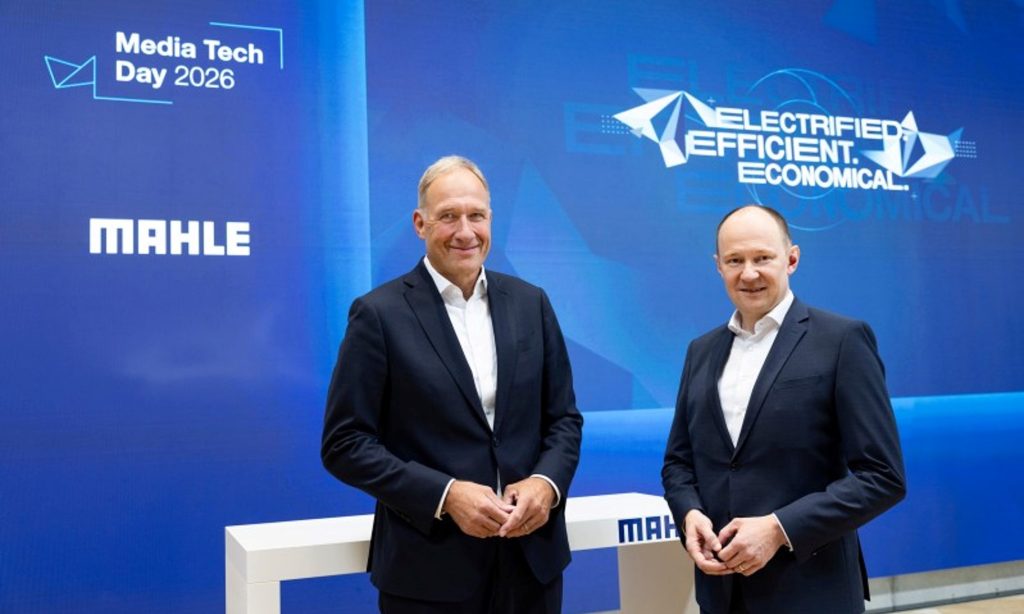
Stuttgart, July 21, 2026 – MAHLE aims to accelerate the electrification of road transport. With its new range extender system for heavy electric trucks and related programs, the Stuttgart automotive component supplier is now paving the way for a faster changeover from diesel trucks, which currently dominate the road transport sector, to battery-electric trucks. Magnetic technologies are key aspects of the new systems, while hydrogen and fuel cell technologies are firmly on the roadmap for the future.
- Range extenders combine the sustainability of electric drive systems with the flexibility and range of the internal combustion engine. The key component of the new system is an efficient high-voltage permanent-magnet generator.
- A new electric motor – free from rare earth elements – has been developed for use on the electric drive axle of heavy commercial vehicles.
- Hydrogen and hydrogen derivatives are seen as key factors for the de-fossilization of the road transport sector so MAHLE is active in numerous hydrogen engine projects and fuel cell technologies.
- As Chinese manufacturers of battery-electric trucks increase their penetration in Europe, MAHLE is focusing on increasing its presence with them.
“With high-performance technologies and production-ready products for electrification we are aiming for further growth,” said Arnd Franz, Chairman of the Group Management Board and CEO of MAHLE at a tech event held by the company in Stuttgart.
At this year’s IAA Transportation, which is to be held in Hanover from September 15 to 20, MAHLE is exhibiting under the motto of “Electrified. Efficient. Economical.” The company is presenting its new range extender as a world premiere as well as other high-efficiency products for the transport sector. In addition to products for battery-electric trucks and hybrids, the group is showcasing techndevelopments for the use of renewable fuels.
Range extender with HV generator
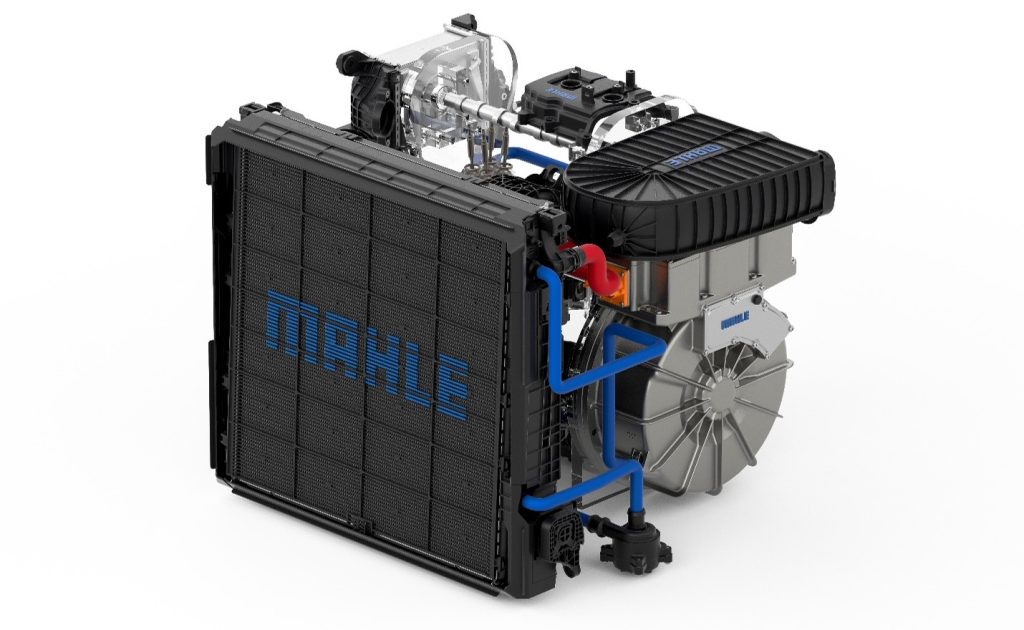
“Our range extender is a smart “emergency power unit” that is activated at precisely the right moment and significantly increases the range available,” said Warth. The key component of the new system is an efficient high-voltage generator with a continuous output of 110 kilowatts (kW) and a peak output of up to 130 kW, driven by a compact internal combustion engine. The generator utilizes a permanently excited electric design with permanent magnets.
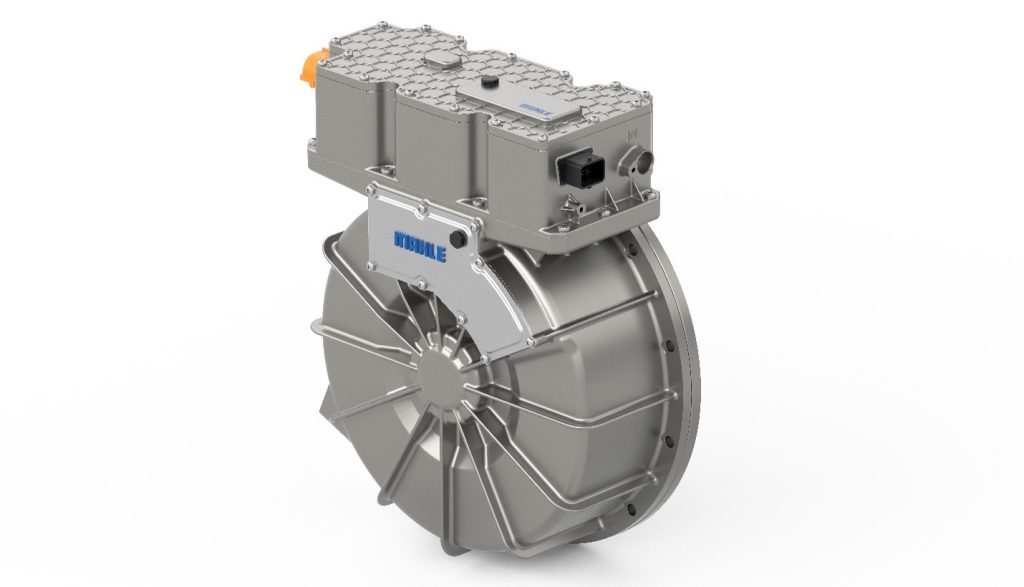
Thanks to its newly developed advanced oil cooling system, the generator has a power density of more than 7 kW per kilogram, allowing a high power output with reduced weight and simplified interfaces.
All in all, a range extender BEV truck can range more than 800 km with the battery providing about 400 km and the range extender the remaining 400 km.
“Our range extender is the key to disconnecting the market ramp-up of battery-electric trucks from the inadequate pace of infrastructure development,” said Warth. “If the charging station is busy, or alternative routes are called for as a result of weather conditions or congestion and infrastructure reaches its limits, other fleets can be stranded; an e-truck with range extender just carries on.”
New motor for heavy commercial vehicles – no rare earth elements
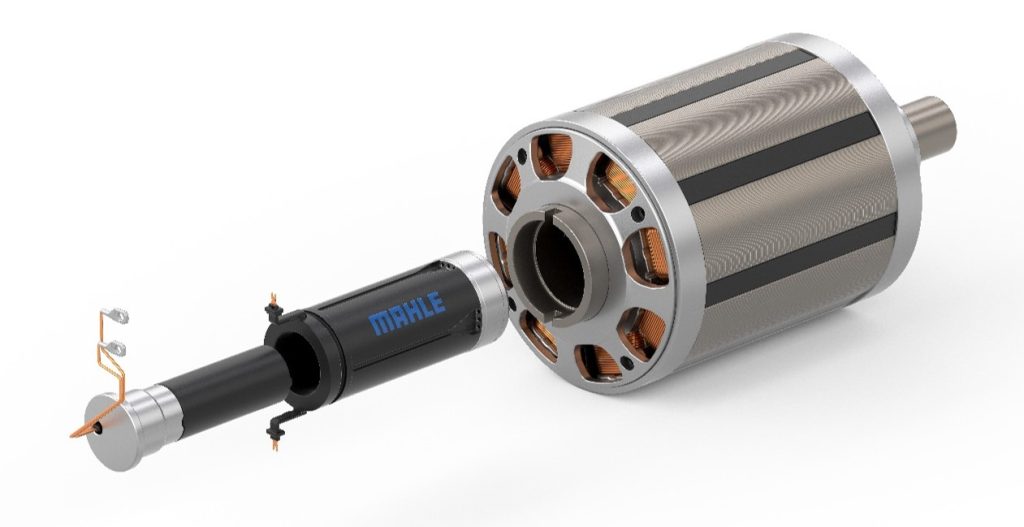
The MAHLE Contactless Transmitter (MCT) electric motor has been developed for use on the electric drive axles of heavy commercial vehicles. It is not equipped with permanent magnets and therefore does not require any rare earth elements. Compared with a benchmark permanent magnet synchronous motor, the MCT electric motor saves up to 3 kilograms of rare earth magnets per vehicle and is 10 percent lighter and more efficient than permanently excited electric motors with magnets under real-life driving conditions. The advantage compared with the permanently excited variant is higher efficiency within a significantly larger operating envelope covering a variety of different driving situations. It has a peak output of 370 kW and torque of over 900 Nm at 3,900 rpm. The motor efficiency in the VECTO cycle, an EU simulation tool for determining the fuel efficiency of new vehicles, is about 95 percent.
Hydrogen technologies in the mix
Along with its traditional leadership in vehicle thermal management, the company is fostering further movements in electrification through various fuel development initiatives. It sees hydrogen and hydrogen derivatives as a key factor for the de-fossilization of the road transport sector and is therefore working on all the major hydrogen engine projects that are currently in progress. The use of hydrogen for power generation in fuel cells is another area of focus. The road transport sector will be a key factor in developing a hydrogen economy in view of its size and existing structures, says Franz. MAHLE is currently participating in a large number of major development projects in Europe and Asia. “It will only be possible to embark on the future of the hydrogen economy without hydrogen-powered commercial vehicles if massive, risky state subsidies are made available,” he notes.
Market penetration and outlook
Every year, MAHLE sells about 8 million electric drive systems and electric ancillaries to customers in the automotive industry, in the smart mobility field and in other sectors. From 2026 to 2029, more than 35 electrified vehicle platforms of leading passenger car and truck manufacturers will be launched based on MAHLE technology and products.
In Europe, MAHLE is present in every battery-electric and fuel cell truck. The company is the market leader for electric climate compressors and among the top three in the marketplace as regards electric pumps and fans. In China, MAHLE is working together with all truck manufacturers to expand its presence in electrified vehicles.
Medium and heavy commercial vehicles account for about 20 percent of the group’s business with the automotive industry. The group has more than 120 customers in the commercial vehicle and off-road sector. Orders received for commercial vehicle business in the first half of 2026 were significantly above the corresponding figure for the previous year, as in passenger car business.
“We expect that we will grow more strongly than the market with our commercial vehicle products over the next five years,” said Franz. MAHLE sees the greatest potential for growth in Asia. The CEO mentioned structural challenges and uncertainties for the business environment, including poor prospects for the European economy, customs tariff developments that were difficult to plan and poor demand in North America as well as growing competitive pressure from Chinese imports in Europe, especially as regards battery-electric vehicles.
Renewable fuels need to be expanded, emphasized Franz. The internal combustion engine remains the dominant drive system for commercial vehicles throughout the world. The share of internal combustion engines in this sector is expected to fall only slightly from the current figure of about 83 percent to about 73 percent by 2035, while electric drive systems will continue to grow but will still play a secondary role. He called for a reliable foundation for the market ramp-up of the various energy sources: charging infrastructure, hydrogen refueling stations and economically viable storage solutions were crucial prerequisites for the productive use of commercial vehicles.
“The transformation to climate-neutral road transport is technically feasible and can also be accomplished economically,” said the CEO. However, he added that this would only be possible if industry, government and customers acted together in a coordinated way.