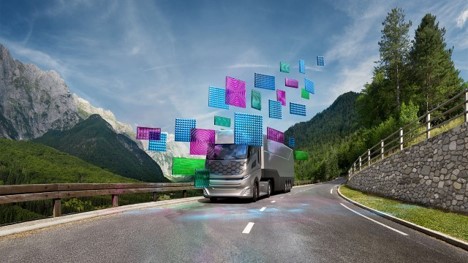
Hannover, Germany, September 15, 2026 – The commercial vehicle industry is facing virtually unprecedented opportunities – but also challenges. Rising transport demands driven by the growth of global trade, stringent regulatory requirements, and a worsening driver shortage are putting pressure on the industry and driving up total cost of ownership.
Bosch’s answer to this is more technology that opens up new economic prospects. It plans to double its sales in the sector by the mid-2030s, the company announced at this year’s IAA Transportation show, taking place September 14-20 in Hannover. Central to the strategy are developments in electric powertrains along with intelligent sensors, actuators, inverters and software – many of which involve advanced magnetic technologies.
Technological diversity in powertrain systems, including advancements in hydrogen and diesel systems, are an integral theme at the company. Separately, for the general EV market It has recently unveiled a new permanent-magnet motor using reduced rare earth content.
“The heavy-duty commercial vehicle business is a key growth area for us. We aim to double our sales in this segment by the mid-2030s,” said Dr. Markus Heyn, deputy chairman of the Bosch board of management and chairman of the Mobility business sector, at the IAA Transportation 2026 in Hannover. The robust commercial vehicle market is also bolstering Bosch’s business.
While global vehicle production is expected to show an overall downward trend in 2026, the heavy-duty commercial vehicle segment (vehicles weighing over six metric tons) is proving to be more resilient. Following a strong first half of the year, Bosch expects global truck production to grow moderately by about 1 percent to approximately 3.3 million trucks, and then to 4 million units by the mid-2030s. On the basis of this forecast and the market uptake of corresponding technologies, Bosch sees the potential to double its heavy-duty commercial vehicle technology sales from today’s more than 4 billion euros by 2035.
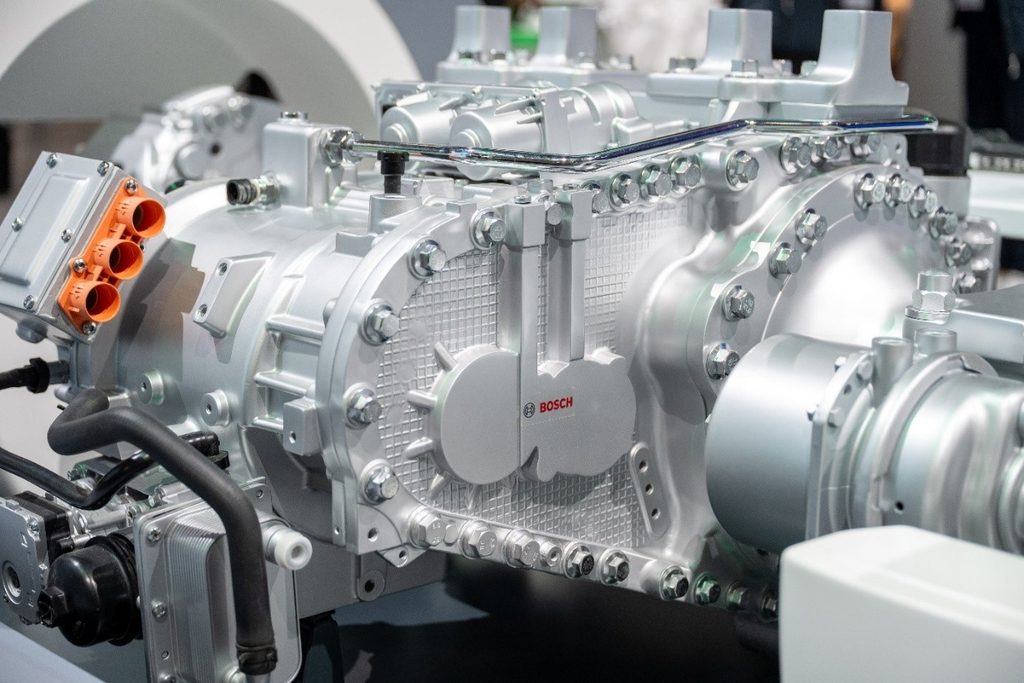
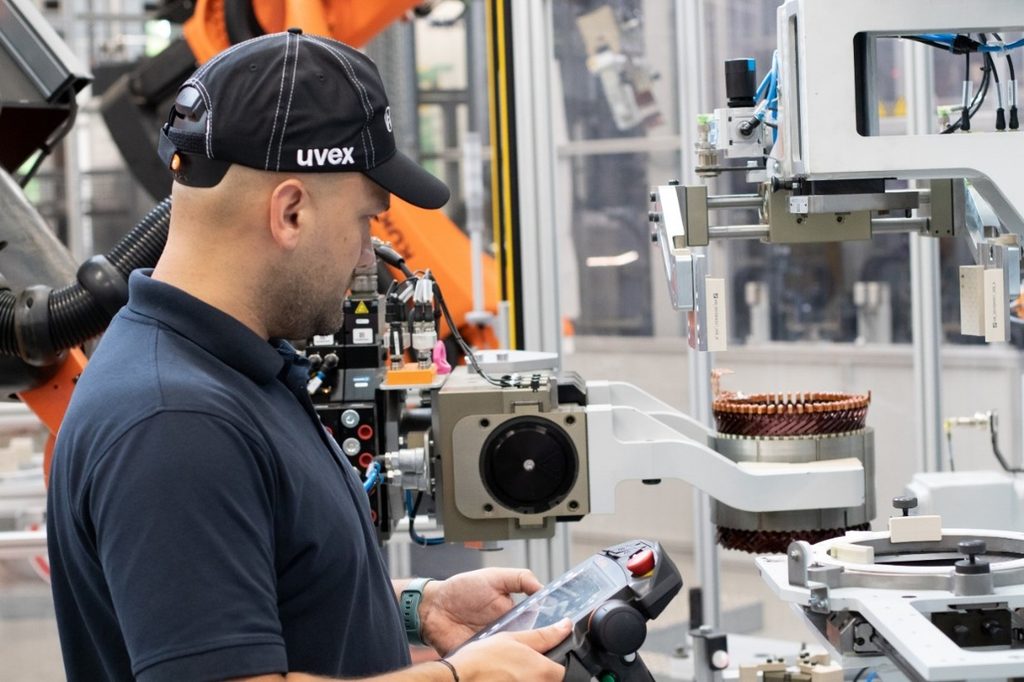
The company’s portfolio ranges from hardware and software to artificial intelligence and cloud-based services that make operating commercial vehicles safer and more economical. Bosch is also boosting its growth by entering new business areas. One of its plans is to establish a new joint venture with Brakes India and Wheels India, two subsidiaries of the TSF Group, to develop smart actuators for compressed air generation, compressed air treatment, air suspension, and parking brakes. Such actuators commonly use permanent-magnet synchronous motors.
Powertrains and technology for all markets
A key element of Bosch’s growth strategy remains its broad portfolio of alternative powertrain technologies. The company is consolidating its market position in battery-electric mobility: in 2026, one-third of all newly registered battery-electric trucks in Europe are powered by electric motors and inverters from Bosch. A major new order from long-time partner Daimler Truck for the eActros electric truck underpins this success: the agreement covers the supply of electric powertrain components manufactured in Europe.
Similar to the passenger car segment, the pace of transformation in the commercial vehicle market also varies by region: electromobility is rapidly gaining momentum and is becoming especially widespread in China. Bosch estimates that by 2030, about one in four newly registered heavy-duty trucks worldwide will be climate-friendly – powered by batteries or fuel cells – with that figure going up to about half by 2035. In the North American market, on the other hand, the traditional – and in some cases, hybridized – diesel engine continues to dominate.
“Achieving the world’s climate goals in the transport sector isn’t an ‘either-or’ proposition – we have to use every technology that helps us transition away from fossil fuels,” Heyn said. “Batteries are also becoming the lead technology in commercial vehicles, but in heavy-duty long-haul transport and on global markets, they will continue to rely on hydrogen and alternative fuels to supplement them.”
Bosch consistently focuses on technological diversity and, in addition to fuel-cell power modules, also supplies key components for hydrogen-powered combustion engines. At the same time, the company intends to systematically expand its leading position in diesel engines and continues to optimize conventional injection systems to help vehicle manufacturers meet new emissions standards such as Euro 7. For the global fleet, renewable synthetic fuels can also help make rapid progress toward climate goals.
Rare-earth-reduced synchronous motor for hybrid and full-electric drivetrains
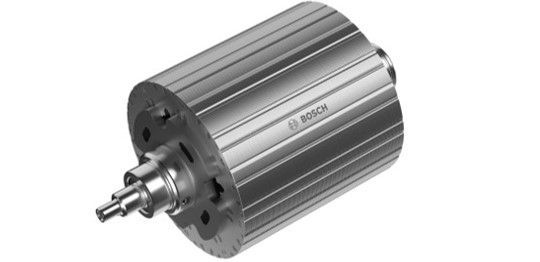
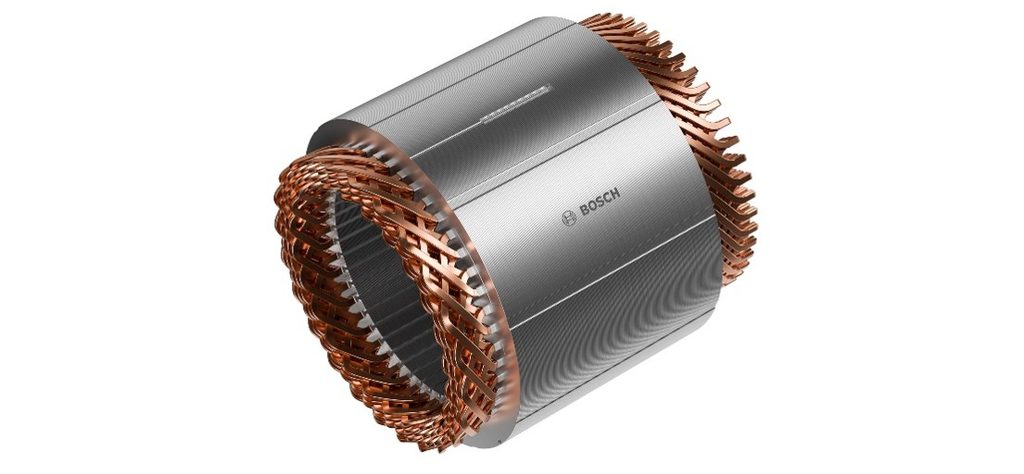
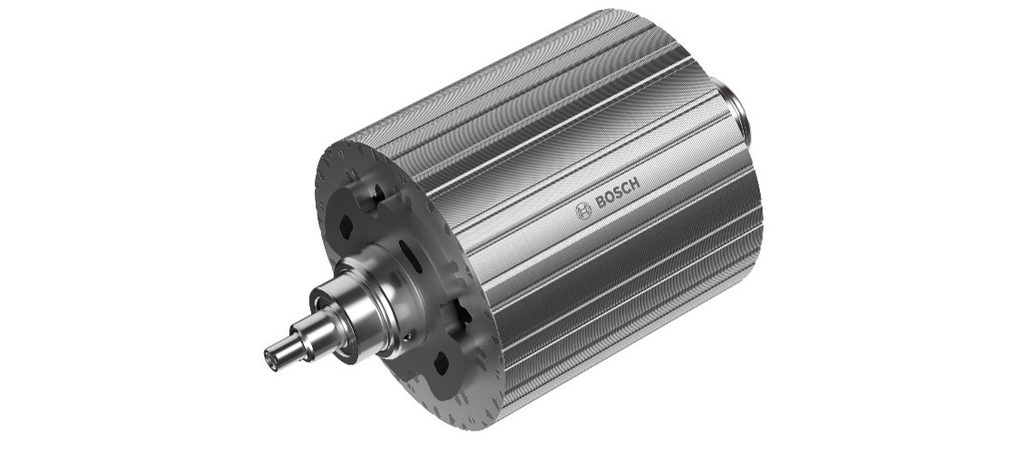
Earlier this year, Bosch introduced a new generation of permanent-magnet synchronous e-motors designed for series-ready electric propulsion for the EV market in general. The advanced motor delivers a world-record gain in efficiency, with only 0.85 kWh/100 km losses in the WLTC cycle and effectively cutting the losses by up to 30 percent. Depending on use case, the motor provides a continuous-to-peak power ratio of up to 93 percent, combining breakthrough efficiency with robust, real-world performance. WLTC, or Worldwide Harmonized Light Vehicles Test Cycle, is a globally recognized test that measures how efficiently a vehicle uses energy under realistic driving conditions so automakers and consumers can compare performance across different vehicles.
“Efficiency is the new horsepower,” said Kevin OKeefe, regional president of Electrified Motion, Bosch in North America.“ Engineered for broad applicability, the motor is designed for both battery-electric and hybrid powertrains. Its modular architecture supports a wide range of vehicle segments, from passenger cars to commercial applications, allowing manufacturers to streamline development and accelerate time to market. The new e-motor also reflects Bosch’s focus on global flexibility and long-term resilience. It incorporates sourcing strategies that support diversified supply chains, including rare-earth-reduced magnet configurations and, where available, localized production.
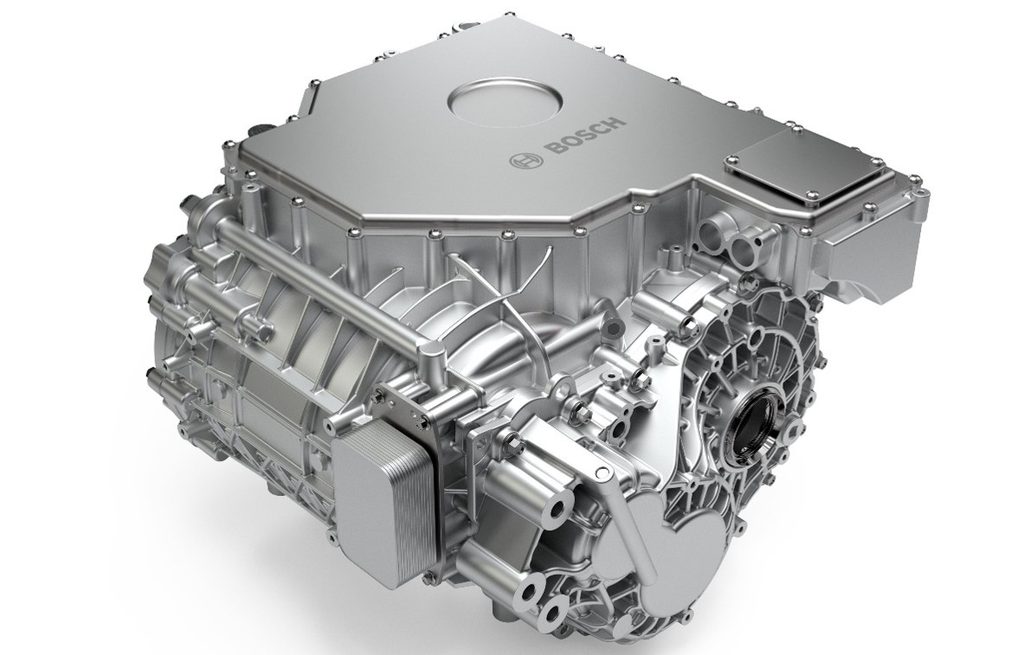
Bosch 3-in-1 e-axle integrating reduced-rare-earth motor topology
For more info, see www.bosch.com.