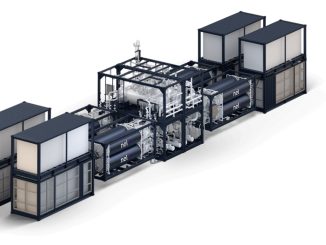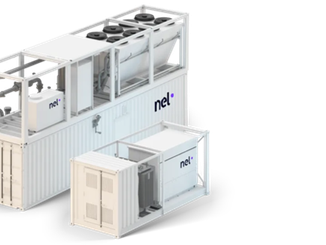
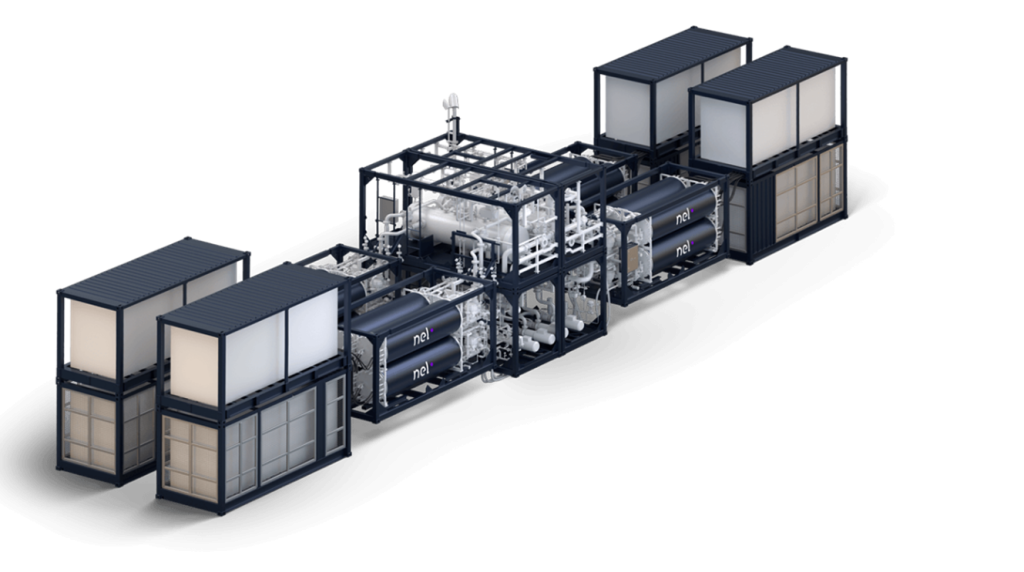
Following more than eight years of development and successful full‑scale prototype testing at its Herøya facility in Norway, Nel ASA’s next‑generation pressurized alkaline electrolyzer system sets a new cost benchmark for large‑scale electrolyzer systems. At a time when many industrial projects have ended up at total system costs approaching, or even exceeding, $3,000 per kW, Nel estimates a turnkey full-scope cost below $1,450 per kW based on a 25 MW plant, with further cost synergies seen for larger plants.
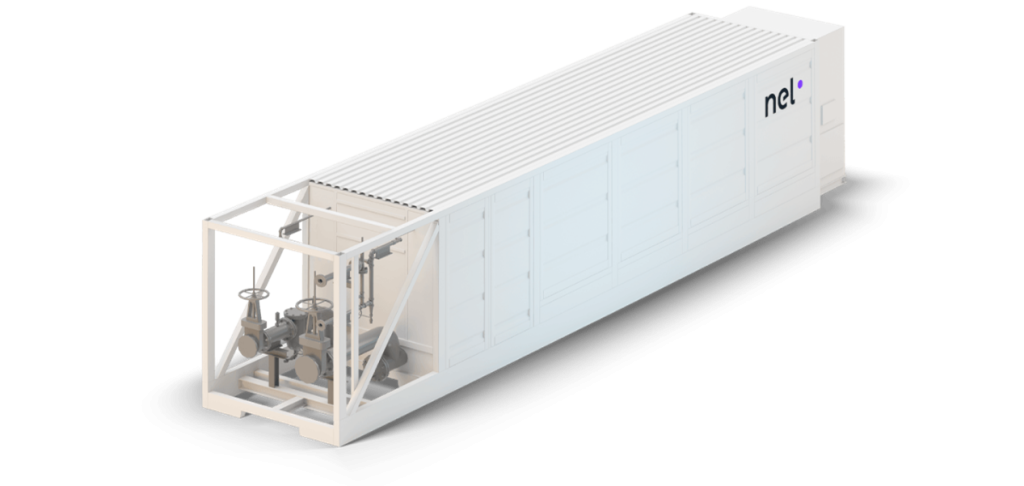
The next-generation pressurized alkaline platform is based on a fully modular, skid‑based design, with factory‑assembled and tested units delivered as standardized products, rather than bespoke projects like we usually see today. The system itself operates in a 15 bar pressurized configuration, reducing the need for downstream compression and improving overall energy efficiency. It is designed for outdoor installation, minimizing civil works and site infrastructure requirements.

Together, these features are expected to reduce system CAPEX by 40-60% compared to solutions available in the market today, shorten project timelines and lower execution risk, contributing to a significantly improved levelized cost of hydrogen. The technology incorporates proprietary production methods and patent‑pending innovations not previously seen in the electrolyzer industry.
“Our next-generation pressurized alkaline technology is designed to unlock business cases that were previously out of reach,” says Volldal. “This enables customers to move from concept to operation faster, with lower upfront capital and reduced execution risk.”
“Customers are increasingly asking for solutions that are simpler to deploy and easier to finance,” says Todd Cartwright, Chief Commercial Officer of Nel ASA. “Interest is growing across industrial and infrastructure applications, including resilience‑driven use cases such as energy security and defence‑related applications.”
The platform is being industrialized following a final investment decision announced in December 2025, enabling a production capacity of up to 1 GW per year at Herøya, with a roadmap to scale production up to 4 GW annually. Industrialization of the platform is supported by a grant of up to EUR 135 million from the EU Innovation Fund, covering up to 60% of eligible industrialization costs. The support underscores the strategic importance of the technology for Europe’s clean energy transition and accelerates time to market.
$7 million order for PEM equipment to be deployed in the US
In a separate development, Nel recently booked an order for PEM electrolyser equipment from Douglas County Public Utility District in East Wenatchee, Washington, a publicly regulated utility that was instrumental in developing state legislation allowing utilities to produce and sell renewable hydrogen.
Instead of frequently ramping up and down the generators at the utilities hydroelectric project, the electrolyser can utilize excess power to help balance the grid. This reduces the need for mechanical adjustments, lowering wear and maintenance on the turbine units and associated equipment. The hydrogen produced can also be used for other high‑value applications.
“We are excited to work with a visionary customer like DCPUD, as this will be the first green hydrogen plant we have sold that will be owned and operated by a public utility,” noted Cartwright. “The flexible operation of our PEM electrolyzers is enabling the district to balance load with demand, in addition to producing a high value fuel” he says. The stacks will be produced at Nel’s manufacturing facility in Wallingford, Connecticut. The electrolyzers are expected to be operational in the first half of 2027.