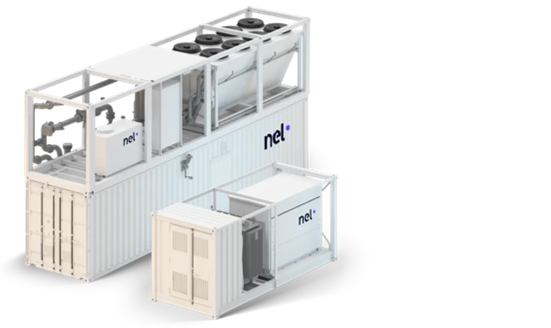
Containerized electrolyser units from Nel are receiving fresh endorsements through recent bookings including multiple submarine deployments via Collins Aerospace, while a strategic partnership with arms manufacturer Rheinmetall in Germany is raising the bar on the concept of hydrogen’s role in decentralized synthetic fuel production as a future imperative across Europe.
On October 13, Nel Hydrogen US, the Oslo-based company’s subsidiary in the United States, announced it has received a purchase order from an undisclosed U.S.-based global technology company for multiple containerized PEM electrolyser units, the MC-series, and related services, with a total value of about USD 12 million.
“We continue to see strong momentum for the MC platform, including customers with demanding technical and operational requirements,” says Todd Cartwright, Chief Commercial Officer at Nel. “This order underlines the quality and maturity of our MC-series, and the confidence leading technology customers place in Nel as a trusted partner.”
The containerized PEM electrolyser platform is designed for scalable, reliable and efficient on-site hydrogen production. Its modular design enables flexible deployment across a broad range of applications. The containerized format supports faster installation and integration in demanding technology environments where performance, reliability and supplier execution are critical.
The stacks will be produced in Nel’s facility in Wallingford, Connecticut and are estimated to be delivered in 2027.
Partnering with Rheinmetall on decentralized synthetic fuel production
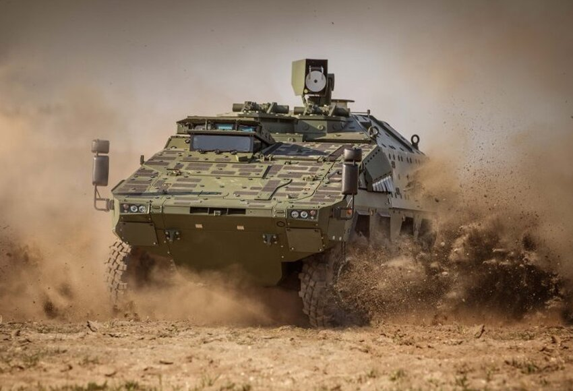
On the same day, Nel ASA in Oslo and Rheinmetall AG in Germany announced they have signed a Memorandum of Understanding to explore joint opportunities in decentralized renewable fuel production supporting critical infrastructure and energy security. The collaboration will combine Nel’s electrolyser technology with Rheinmetall’s Giga PtX concept and systems-integration expertise to assess scalable, modular solutions for the localized production of low-carbon synthetic fuels for defense and critical infrastructure.
Rheinmetall’s Giga PtX project vision is a network of several hundred decentralized, large-scale production plants for synthetic fuel with a unit size of up to 50 MW. Each plant combines the components of energy generation, hydrogen and CO2 supply and fuel synthesis locally. Rheinmetall has been seeking strategic tie-ups with local champions for specific markets. Other electrolyser companies it has partnered with are Dresden-based Sunfire and ITM Power in the UK.
In a period of heightened geopolitical tension, secure access to fuels is becoming an increasingly important part of national preparedness, explain the companies Rheinmetall. Many countries remain dependent on imported fuels or refined products supplied through long, centralized logistics chains. Producing fuels closer to where they are consumed can reduce exposure to disruption and strengthen national and regional energy security. This challenge is particularly evident in Norway. With only one oil refinery in operation, the country exports significant volumes of crude oil to Europe for refining before refined products are transported back for domestic use. In times of disruption, this can leave parts of the fuel supply chain dependent on infrastructure beyond national control.
“Countries that depend on long and vulnerable fuel supply chains face increasing uncertainty. We believe renewable hydrogen can play an important role in enabling more resilient fuel systems while reducing emissions,” said Kjell Christian Bjørnsen, CFO of Nel. “Through this collaboration with Rheinmetall, we are exploring how our technology can be integrated into new value chains for synthetic fuels.”
“The transformation of energy systems requires new partnerships across industries,” said Shena Britzen, Head of Hydrogen Program of Rheinmetall AG. “By working with Nel, we are exploring decentralised synthetic fuel solutions that can support both civilian and defence-related needs. We see localised synthetic fuel production, enabled by electrolysis, as an important element in strengthening energy security and future fuel supply chains.”
Under the MoU, Nel and Rheinmetall will jointly assess technical and commercial feasibility, including potential sites, infrastructure requirements, renewable power access, sustainable carbon sources and priority use cases. The cooperation may include pilot projects to validate modular concepts and demonstrate the viability of decentralized fuel ecosystems.
Already active in products and systems for hydrogen technology, Rheinmetall makes storage products, transportation systems and industrial components such as valves and pumps that serve the hydrogen industry.
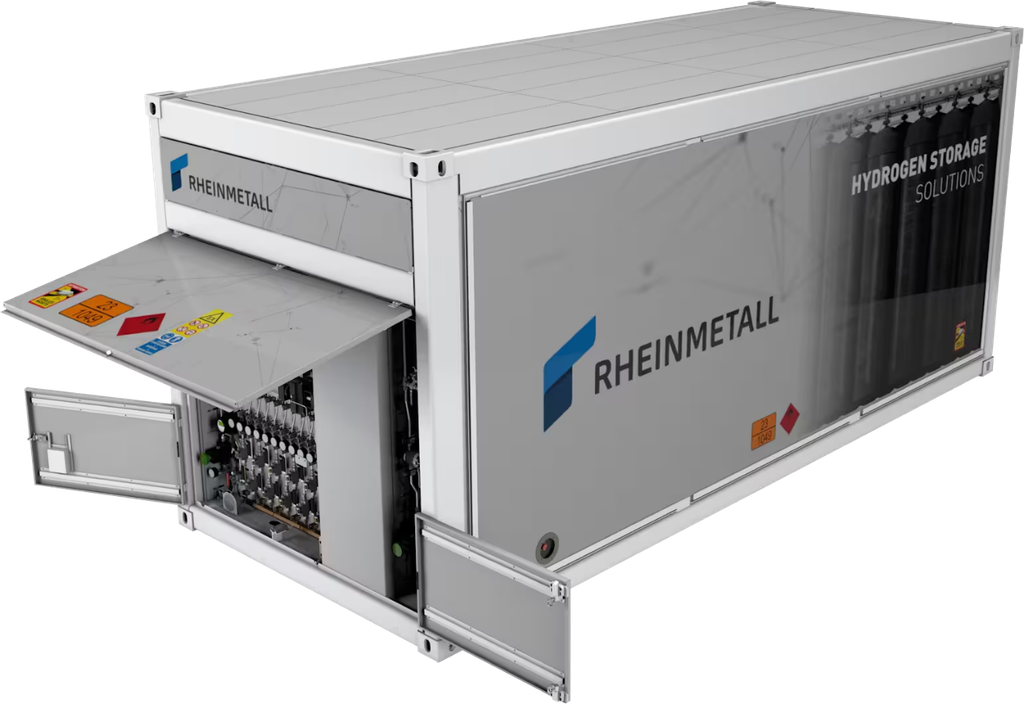
PEM electrolyser stacks ordered by Collins Aerospace for submarine life-support
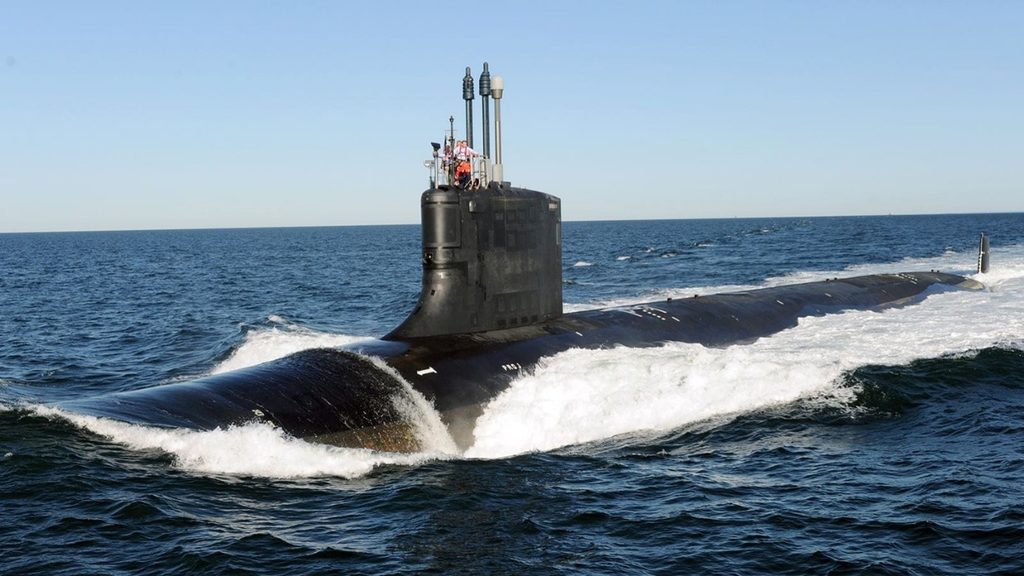
In September, Nel Hydrogen US secured additional purchase orders from Collins Aerospace for PEM electrolyser stacks used in submarine life-support systems. By splitting water molecules into hydrogen and oxygen, the units can provide onboard oxygen while the hydrogen can be released back into the sea.
In aggregate, the newly received orders related to US, UK and French naval programs have a value of approximately USD 7 million. Together with the USD 12 million purchase order announced on September 29, 2026, and additional smaller orders received earlier in the month, Nel’s submarine-related order intake from Collins Aerospace totals approximately USD 20 million.
“These additional orders extend our work across several submarine programs and demonstrate continued demand for our PEM technology,” says Nel’s Chief Commercial Officer, Todd Cartwright. “Submarine life-support systems impose demanding requirements for reliability and product lifetime. Our operating track record and established manufacturing capabilities position us well to serve this specialized market.” Deliveries under the additional orders are expected during 2027 and 2028. The stacks will be manufactured at Nel’s facility in Wallingford, Connecticut. For more info, see www.nelhydrogen.com.