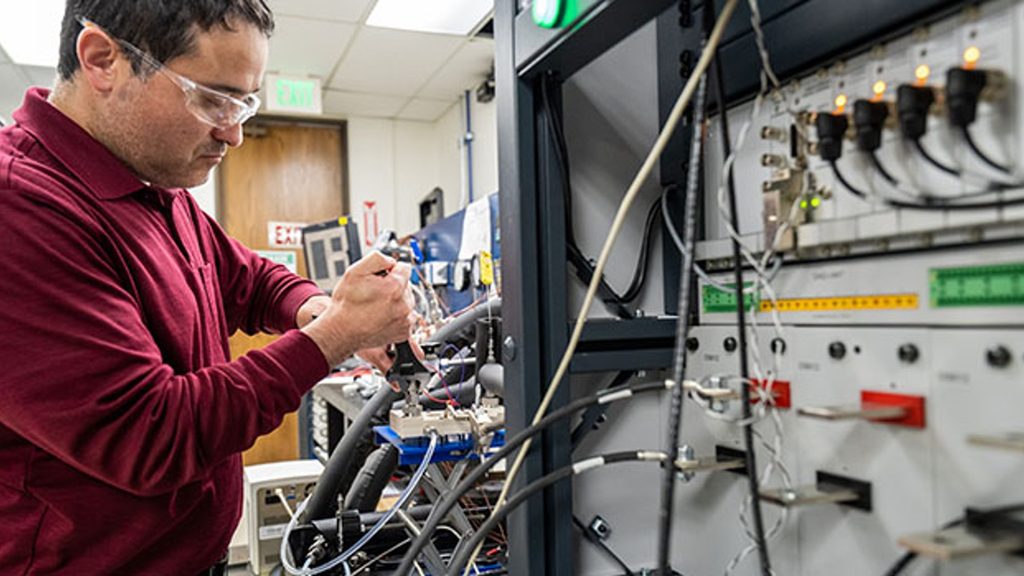
Research focused on advanced power electronics and electric machines is a key priority at National Laboratory of the Rockies, formerly known as the National Renewable Energy Laboratory and now with a broadened mandate. The aim is to deliver safe, high-performing components and systems that control the flow of electricity among energy sources, vehicles and the grid.
The lab’s scientists and engineers work closely with vehicle manufacturers, suppliers, universities and other research organizations to develop lightweight, cost-effective, power-dense technologies that advance the nation’s transportation and energy systems – all backed up by an impressive roster of equipment and instrumentation. The mission is to provide the scientific building blocks needed to spur innovation through fundamental power electronics and electric machine research and engineering. Underlying the name change is a broader applied energy mission for NLR rather than a primary focus on renewable and alternative energy sources
As part of its outreach efforts, the lab has recently prepared several brochures and instructional presentations that summarize the efforts and lab capabilities, notably its Advanced Power Electronics and Electric Machines: Overview. Top areas of attention in the presentations are:
Experimentation and modeling are important aspects of the operations with world-class facilities and equipment to enable novel experimental and modeling capabilities for advanced power electronics and electric machine design, development and performance evaluation. For example, click here to learn about NLR’s power electronics and electric machines facilities.
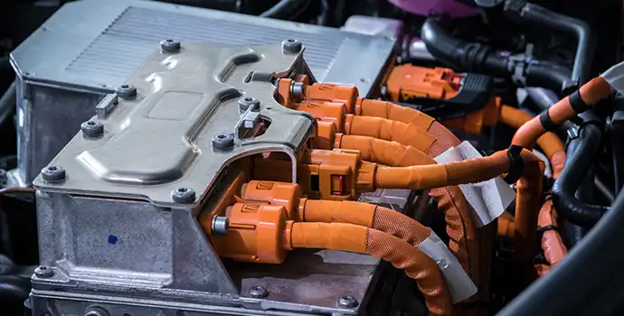
Electric vehicle innovation is a major area of investigation. Advanced transportation and energy technologies rely heavily on power electronics to distribute the proper amount and type of power between components such as batteries, inverters, converters, chargers, and electric machines. Power electronics also determine the exact nature and timing of the current and voltage waveforms to the electric machine.
Semiconductor Power Electronics Electro-Thermal Design
NLR investigates and develops electro-thermal designs and thermal management strategies for compact, power-dense wide-bandgap (WBG) and ultra-wide-bandgap (UWBG) semiconductor devices.
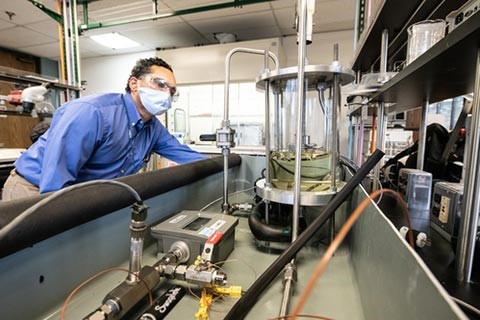
NLR researchers focus on electrical and electro-thermal modeling and cutting-edge thermal management technologies to enable the development of WBG and UWBG components that are compact, lightweight, cost-effective and high-performing.
Power Electronics Packaging
NLR researchers strive to improve the performance, reliability, durability and power density of power electronics packaging technologies. Innovative power electronics packages can maximize the electrical, thermal, and mechanical performance that can be extracted from a semiconductor switching device.
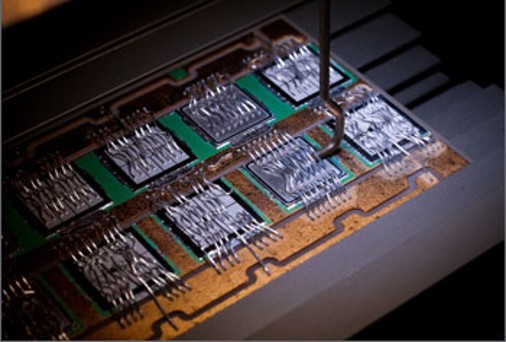
Researchers at NLR characterize the reliability of power electronics packages, including state-of-the-art packages designed in house, to improve the reliability and durability of emerging vehicle and energy technologies. The wide-bandgap (WBG) and ultra-wide bandgap (UWBG) semiconductor devices designed and evaluated at the lab offer improved performance, reliability, and cost. However, high-temperature bonded interface materials are essential to enable compact, lightweight, low-cost, reliable power electronics packaging that fully utilizes the capabilities of these high-performing devices.
Electric Motor Thermal Management
NLR’s electric machine thermal management research generates experimental data and simulation processes for the modeling, analysis, design, and construction of new electric machines for vehicles.
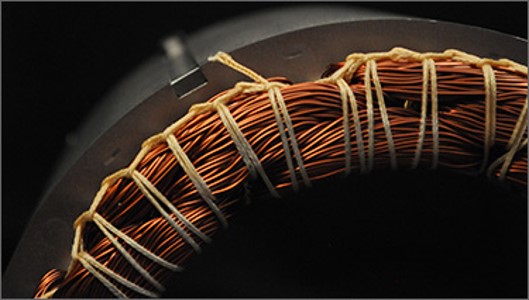
The research helps to better understand and evaluate the material and interface properties of electric machines as a function of temperature. Researchers also develop and evaluate advanced fluid-based electric machine cooling strategies for improved performance and reliability of electric-drive vehicles.
Industry partners want to better understand heat transfer in electric machines to develop motors that reliably operate with reduced size and cost. NLR research addresses this challenge and supports broad industry demand for data, analysis methods, and experimental techniques to improve electric machine thermal management.
Overall, the research works to accelerate lightweight, compact, reliable, and high-performing systems and components. These improvements can unlock lower costs, longer lifespans, and improved performance for vehicle and energy technologies. See www.nlr.gov.


