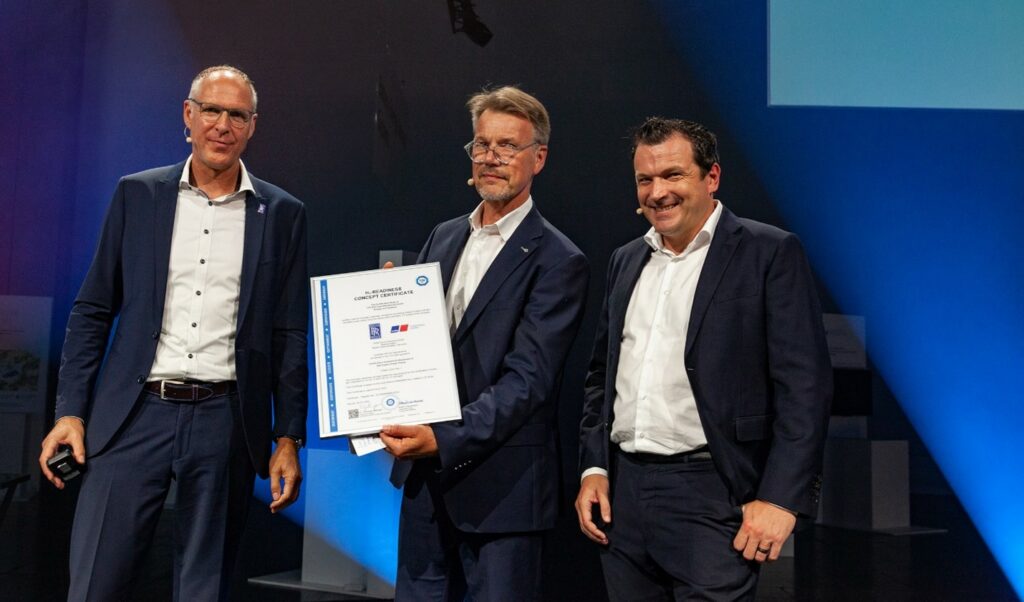
Rolls-Royce has received H2 readiness certification from TUV Sud for its current mtu Series 4000 FNER/FV gas engines. H2-ready means that the components and systems are prepared for future use with hydrogen and can be converted accordingly. The certificate is an independent confirmation by one of the leading international testing and certification service providers of the concept with which Rolls-Royce will provide newly built and retrofitted power plants with the engines for operation with a hydrogen admixture of up to 25% by volume and for operation with 100% by volume. When using green hydrogen, the operation of the engines is CO2-free.
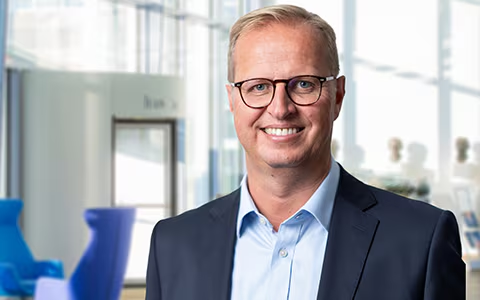
“We see hydrogen as one of the key elements of the energy transition. With our strategy of making our engines fit for the use of sustainable fuels, we will make a decisive contribution to its success,” explained Dr Jörg Stratmann, CEO of Rolls-Royce Power Systems.
“The certificate increases investment security for our customers. They can be sure that they will be able to use hydrogen as a fuel with our engines in the future. With this step, we have reached another milestone on our hydrogen roadmap,” said Tobias Ostermaier, president of the business unit Stationary Power Solutions at Rolls-Royce Power Systems.
The first installation of the engines running on 100% hydrogen is planned for early 2025 for the Enerport II lighthouse project in the German inland port of Duisburg. The two combined heat and power plants will contribute to the CO2-neutral energy supply in the new container terminal.
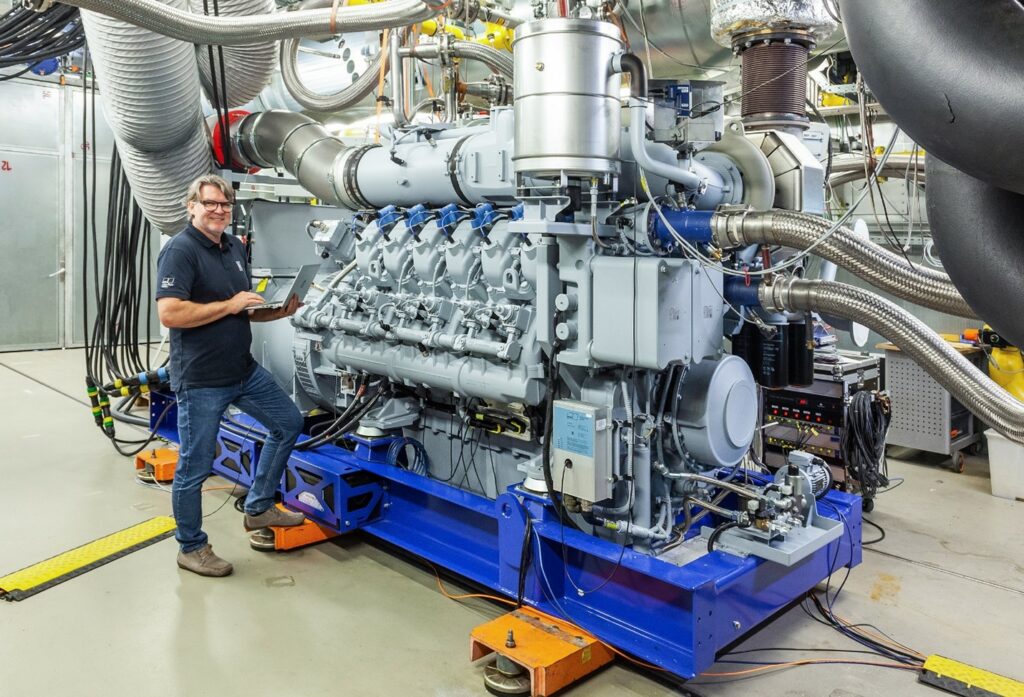
Rolls-Royce engineers have been testing the engines at the gas engine plant in Augsburg before they are delivered. Tests of the 12-cylinder mtu Series 4000 L64 gas engine have shown very good performance, efficiency and emissions characteristics. The engine has already achieved the project’s desired total output of one megawatt. In further development, 1.2 megawatts are expected.
In 2024, Rolls-Royce began working in a consortium with five companies and research centers to develop the necessary technologies for highly efficient hydrogen combustion engines to power combined heat and power (CHP) plants. As part of the publicly funded Phoenix (Performance Hydrogen Engine for Industrial and X) project, the engine is set to generate the same electrical and thermal energy (power density and efficiency) as currently available natural gas CHP units in the larger output range of up to 2.5 MW for the first time.
CO2-free H2 engine power plants are expected to follow natural gas and biogas plants as the backbone of the energy transition. As part of the expansion of renewable energies, the German government has decided in favor of building more gas-fired power plants with its power plant strategy and wants to promote them. Smaller, decentralized gas engine plants can flexibly balance out the fluctuating feed-in of wind and solar power into the grid, depending on the weather conditions. Biogas generators are currently being used to reduce CO2 emissions.
“We can hardly wait to see our first CO2-free hydrogen CHP in operation in the container port of Duisburg soon. As soon as the availability of green hydrogen is ensured, the technology for highly efficient next-generation hydrogen engines promoted in the Phoenix project will also be ready,” added Ostermaier.
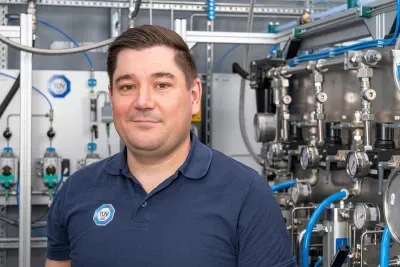
TUV Sud opened an extensive testing laboratory dedicated to hydrogen products and services in 2021, and has continuously added to its capabilities. “Our laboratory, based in Garching near Munich, offers all capabilities necessary to assess the suitability and safety of components and systems for hydrogen”, says Martin Sekura, Business Development Manager Hydrogen. At the laboratory, test items undergo testing for their resistance to pressure cycles and leak tightness as well as their behaviour in throughflow mode or in the event of overpressure or bursting. The experts also examine permeation and hydrogen compatibility. Hydraulic testing, environmental simulation and testing of electromagnetic compatibility are available in further company test laboratories.