
Leveraging its acquisition two years ago of Swiss company, maglab AG, CTS Corporation, a global developer in sensing and motion control technologies, has launched a new platform for electric motor control based on real-time, in-situ magnetic field sensing. Called COBROS (Calibration and Operation Based on ROtational Symmetry), it comes out of more than seven years of intensive research and development and represents a fundamentally new approach to controlling permanent magnet synchronous motors (PMSM), says the company. Applications include EVs and micromobility systems, industrial drives and aerospace actuators.
Traditionally, vector-controlled motors rely on indirect measurements to estimate the magnetic state inside the motor. These methods typically involve separate sensors for rotor position, such as encoders or resolvers, and current sensors like shunt resistors or Hall-effect devices.

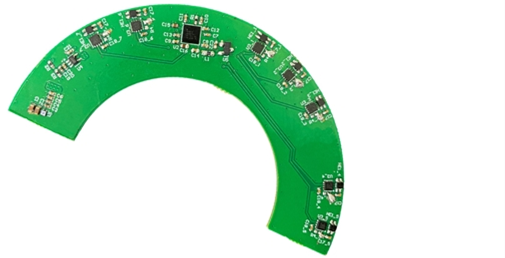
Instead of estimating the magnetic state through external signals, COBROS directly measures the magnetic fields (B-fields) inside the motor, both for the stator and the rotor fields. A custom PCB sensor is embedded inside the motor, similar in form to a standard inductive position sensor, but can capture the full magnetic field data in real time — eliminating the need for three discrete current sensors and a position sensor.
“COBROS represents a step change in how we control electric motors,” said Javier Bilbao, Director of Product Management at CTS. “By moving from indirect estimation to direct measurement of the magnetic field, we can significantly improve accuracy and dynamic performance while also reducing system complexity and cost. This innovation enables a new level of integration for our customers in automotive, industrial, and robotic applications.”
He heads up the company’s MagLab operation in Zug, Switzerland which was acquired by CTS two years ago. He was managing director of privately held maglab AG, acquired in 2023. It leverages magnetic material and sensor engineering experience to deliver solutions in magnetic systems design and current measurement.
The COBROS sensor technology is based on advanced magnetic sensing using Hall effect and tunnel magnetoresistance (TMR) elements. Combined with a new signal processing architecture, they enable multidimensional decomposition of the motor’s magnetic field. The compact, PCB-based design integrates easily into standard motor architectures, providing a seamless upgrade path for OEMs and system developers, says CTS.
Rather than inferring the magnetic state through a traditional position sensor and several external current sensors, the COBROS sensor can directly output physical characteristics like torque and rotor angular position or inferred ones like each individual phase current. The approach not only eliminates signal estimation errors for more accurate and efficient vector control, it also provides data redundancy that can be used for enhancing additional functionalities.
According to CTS, the new platform represents a fresh alternative to traditional motor sensing. Here is how it explains the technology:
Traditional Position Sensing in Electric Motors
Accurate motor position sensing is crucial for maximizing the efficiency and performance of electric motors. In AC motors, especially PMSMs, precise knowledge of the rotor’s position allows the control unit to optimally align the stator current with the rotor’s magnetic field, enabling efficient torque production. Measuring both the rotor angle and its speed enables smoother acceleration and deceleration, precise speed regulation and the implementation of regenerative braking in transportation applications.
Magnetic Resolvers and Inductive Position Sensors
In modern electric motors, rotor position is typically measured using either magnetic resolvers or inductive position sensors mounted along the motor shaft. Magnetic resolvers operate by coupling signals between primary and secondary windings through a rotating magnetic core, while inductive position sensors use printed coil structures to generate and sense high-frequency magnetic fields. Both technologies provide precise rotor angle information, which is essential for motor control, but they do not give insight into the actual magnetic field distribution inside the motor. In addition, because these sensors are mounted along the motor axis, they consume valuable axial space, a critical design constraint for electric vehicle motors, where compact packaging and high power density are key to efficiency.
Resolvers
Resolvers are another popular means of motor position sensing. Very durable components, resolvers are also mounted on the rotor shaft, functioning in essence like a small transformer. An AC signal is applied to its rotor winding, and as the shaft turns, two stator windings (arranged 90° apart) output voltages proportional to sin(ϴ) and cos(ϴ) of the rotor angle. The motor controller processes these signals to calculate the rotor’s exact position and speed in real time.
While very rugged and well-suited for the harsh operating environment of e.g., electric vehicle motors, resolvers are generally larger than encoders and also require additional electronics to function, taking up more space in the system architecture.
COBROS motor position sensing
Instead of having the motor control unit calculate the rotor and stator magnetic states through indirect signals, COBROS employs a PCB-based module with several Hall-effect sensors to directly measure the magnetic B-fields generated by the rotor and stator.
By utilizing multiple industry standard magnetic sensors, COBROS can perform multi-dimensional field decomposition, processing the data to accurately determine the rotor position. As no data is lost in the multi-dimensional field, signal estimation errors are eliminated. By applying the same method to the remaining field analysis data, stator field and current sensing also become possible.
The platform is well positioned for applications for EVs, industrial systems and aviation actuators, says CTS, giving these examples:
Electric Vehicles & micromobility – Using the field of magnets inside the rotor, COBROS can provide accurate readings for efficient vector control, leading to a smoother torque response that will translate to better acceleration and deceleration while improving functionalities such as regenerative braking. As the stator’s magnetic field is included in the measurements, this information can also be used to identify the stator currents in addition to the torque of the machine. This could potentially mean that current measurements in the inverter could also be replaced
Industrial drives – Due to their high efficiency, power density and precision, PMSMs are seeing increased use in industrial drive applications such as robotics, CNC machines and elevators/lifts. Controlling these synchronous machines requires precise angle and phase current measurement which COBROS can provide in reduced space.
Aerospace actuators – PMSMs are increasingly used in aerospace because of their high efficiency, compact size and excellent power-to-weight ratio. They are found in critical systems such as flight control actuators, landing gear drives, electric braking systems and pumps for fuel, hydraulics, and environmental control. PMSMs are also being developed for emerging electric propulsion concepts, including hybrid-electric aircraft and eVTOLs. Their precise torque and speed control, combined with superior efficiency compared to induction machines, make them the preferred motor option where reliability, lightweight design and performance are essential, making them attractive applications to employ COBROS for position sensing.
Based in Lisle, Illinois, CTS has a long heritage of technology innovation dating back to its beginnings in 1896 as a pioneer manufacturer of telephones, known then as Chicago Telephone Supply. For more info, see www.ctscorp.com.